Slide 1 of 1: About Brazil
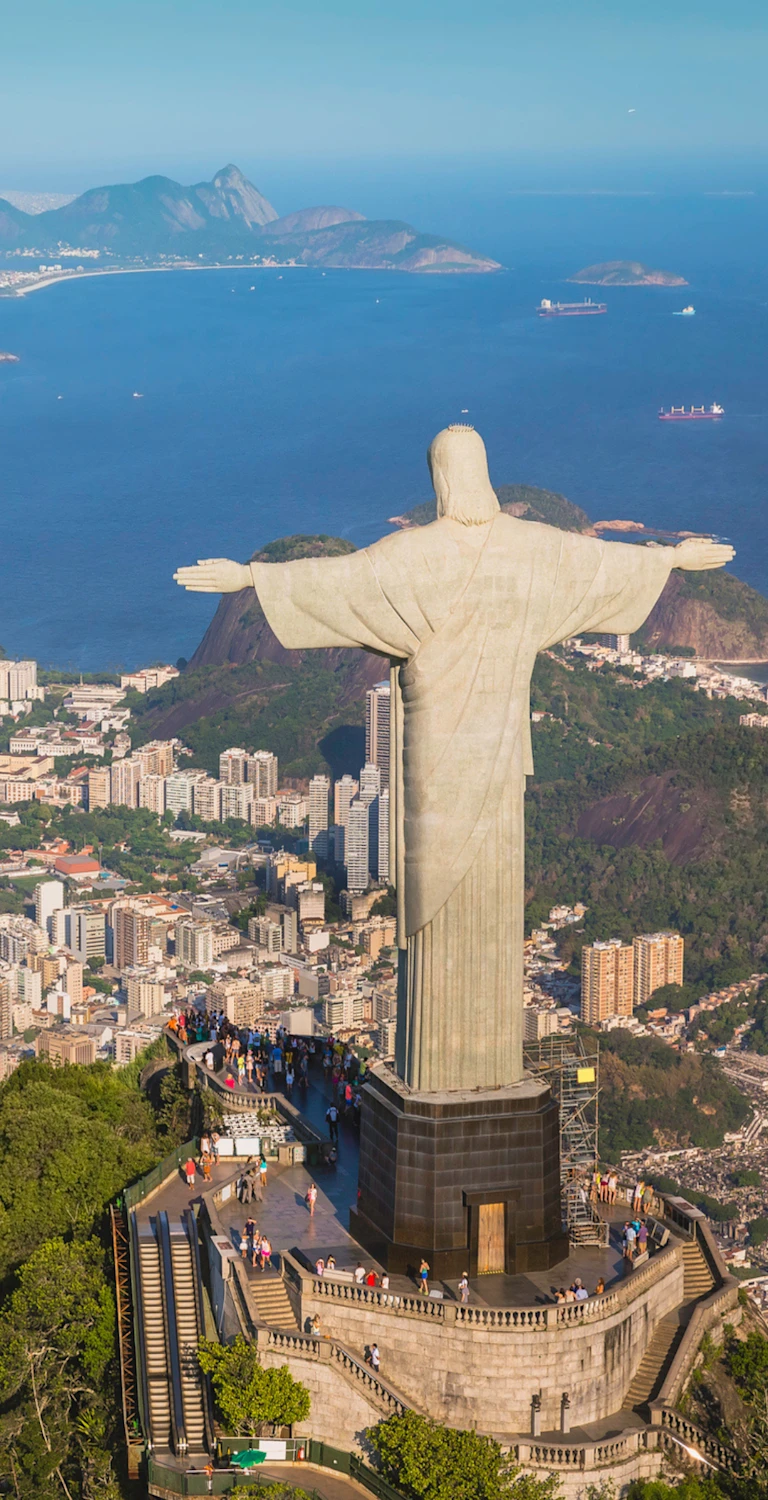
Aerial view of Rio de Janeiro, Brazil, featuring the Christ the Redeemer statue atop Corcovado Mountain overlooking the city, Guanabara Bay, Sugarloaf Mountain, and surrounding coastline under clear daylight.Aerial view of Rio de Janeiro, Brazil, featuring the Christ the Redeemer statue atop Corcovado Mountain overlooking the city, Guanabara Bay, Sugarloaf Mountain, and surrounding coastline under clear daylight.

About Brazil

Brazil: A land of diversity, opportunity, and global connections

Brazil is more than a country

The largest nation in South America and the fifth largest on the planet

Brazil is home to over 213 million people, a continental territory of extraordinary diversity, and an economy deeply integrated into global value chains. Few destinations in the world combine this scale of demographic vitality, natural richness, and economic dynamism in a single experience.

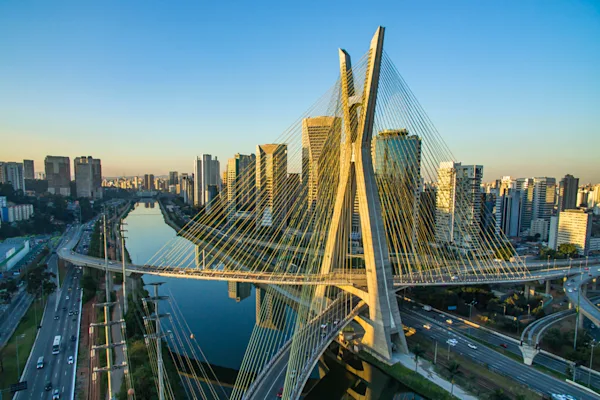
Aerial view of a cable-stayed bridge crossing a river through a modern city skyline at sunset. Distinctive X-shaped towers and radiating cables frame high-rise buildings, highways, and waterways under a clear blue sky.
With a median age of approximately 35 years, Brazil brings together the energy of a young, urban society and the strategic weight of one of the world's most complex and diverse economies. Its cultural plurality — shaped by Indigenous roots, African heritage, European migration, and influences from Asia and the Middle East — creates an environment that is as intellectually stimulating as it is personally transformative.

For international students and executives, Brazil is not simply a destination. It is an immersive encounter with one of the defining forces of the 21st century.

Brazilian UNESCO World Heritage Highlights

Brazil's UNESCO sites are windows into multiple civilizations, aesthetic movements, and natural wonders that have shaped — and continue to shape — the world.

Cultural Heritage

  • Ouro Preto (Minas Gerais) — Brazil's first UNESCO-inscribed site (1980), a living testament to the 18th-century gold cycle and one of the finest examples of Baroque architecture in the Americas.

  • Olinda (Pernambuco) — A colonial jewel where Portuguese, Indigenous, and Afro-Brazilian cultural layers interweave in cobblestone streets and vibrant festival traditions.

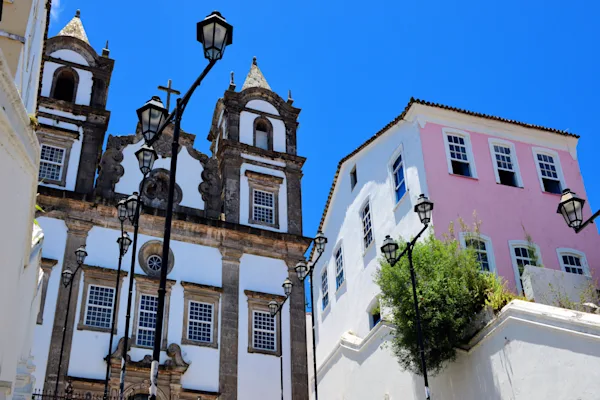
  • Historic church and colorful colonial buildings in Salvador, Brazil, viewed from a low angle. Black street lamps line the scene, while bright blue skies and white façades highlight the city's rich architectural heritage.
    Historic Centre of Salvador (Bahia) — One of the most significant Afro-diasporic cultural centers in the world, where African heritage shapes religion, music, cuisine, and daily life.
  • Brasília (Federal District) — A UNESCO site since 1987, celebrated globally as a landmark of modernist urbanism, conceived by Oscar Niemeyer and Lúcio Costa.

  • Sanctuary of Bom Jesus de Congonhas (Minas Gerais) — A Baroque religious masterpiece, home to the iconic sculptures of Aleijadinho, one of the greatest artists of the colonial Americas.

  • Cais do Valongo (Rio de Janeiro) — The most significant port of arrival of enslaved Africans in the Americas, and a site of profound global historical memory.


Regional Cultural Diversity Across Brazil

Brazil's continental scale — stretching across five distinct macro regions — produces a cultural landscape of remarkable variety. Each region carries its own history, climate, culinary traditions, Indigenous heritage, and artistic identity, shaped by centuries of migration, resistance, and reinvention.


  • North — The Amazon World

    Dominated by the Amazon rainforest and home to numerous Indigenous communities, the North is where Brazil's most ancient cultural roots remain most vivid.
  • Northeast — Soul of Brazil

    The Northeast is the region with the largest Afro-Brazilian population and one of the most culturally expressive corners of the country.

  • Central-West — Frontier and Nature

    Vast natural landscapes — including the Pantanal and the Cerrado — define the Central-West, alongside Brasília's iconic modernist architecture. A blend of Indigenous traditions, Portuguese heritage, and frontier spirit shapes the region's culture.

  • Southeast — The Economic and Cultural Core

    Home to São Paulo, Rio de Janeiro, and Minas Gerais, the Southeast is Brazil's economic engine and one of its richest cultural.

  • South — European Roots, Brazilian Spirit

    Shaped by waves of German, Italian, and Polish immigration, the South stands apart for its temperate climate, distinctive cuisine — from chimarrão to colonial recipes — and strong regional identity rooted in agricultural communities and European heritage.

Silhouetted capoeira practitioners performing an acrobatic kick and dodge at sunset, with rolling hills in the background and warm golden light highlighting movement, balance, and Brazilian cultural tradition.
Crowd of Brazilian soccer fans wearing yellow and green jerseys celebrate enthusiastically, cheering with raised arms as confetti falls around them during a festive match-day gathering.
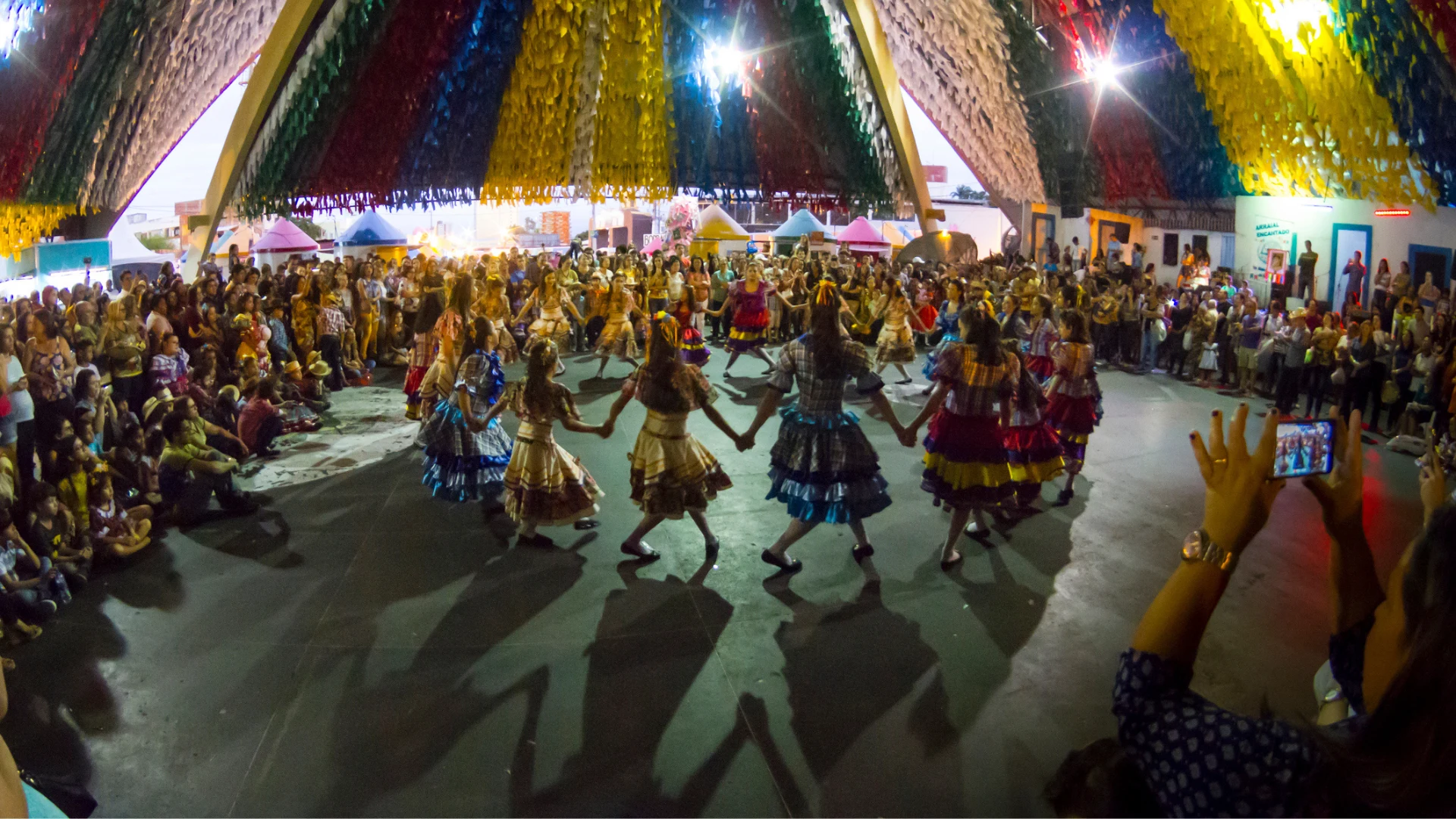
Dancers in colorful traditional costumes perform in a circle at a lively Brazilian Festa Junina celebration, surrounded by a large crowd under a canopy of vibrant hanging decorations.

World-Class Natural Landscapes


Brazil is one of the planet's great natural treasures — a country that covers 8.5 million km² and harbors approximately 10% of all known species on Earth. Its biodiversity spans some of the world's most extraordinary ecosystems: the Amazon rainforest, the Atlantic Forest, the Cerrado savannahs, the Pantanal wetlands, and thousands of kilometers of coastline.

At the heart of this natural wealth stands the Amazon — the largest continuous tropical rainforest in the world and one of the most ecologically critical systems on the planet.
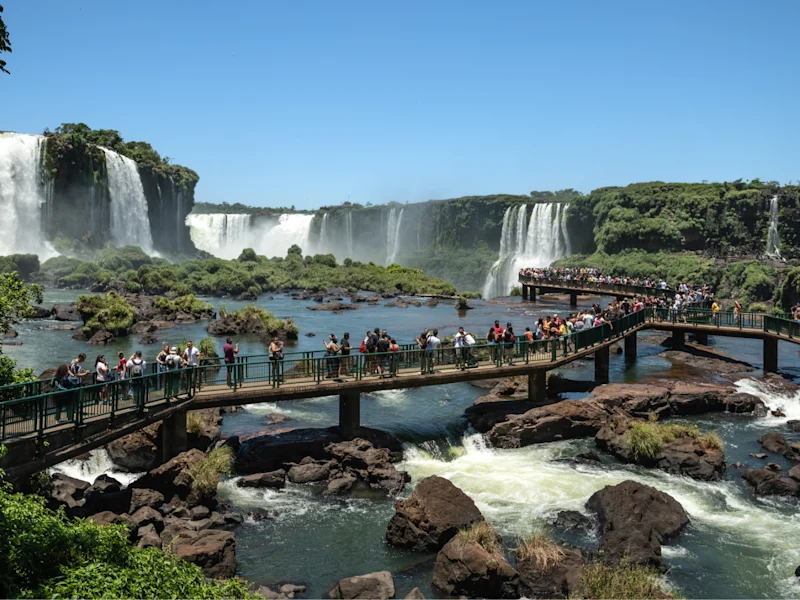
Wide view of a waterfall system cascading into a rocky river, with visitors walking along elevated boardwalks and viewing platforms surrounded by lush green vegetation under a clear blue sky.


The Amazon's global significance is profound:

  • Unmatched biodiversity — The Brazilian Amazon forms the core of one of the planet's richest biodiversity regions, anchoring Brazil's status as a megadiverse nation and home to a remarkable share of all known species on Earth.

  • Climate regulation — The rainforest absorbs vast amounts of carbon and regulates rainfall patterns across South America and beyond, making it indispensable to global climate stability.

  • Hydrological importance — It encompasses the basin of the Amazon River — the longest river in South America at 6,992 kilometers — which shapes ecosystems, livelihoods, and scientific inquiry across the continent.

  • Protected areas of international significance — UNESCO-designated zones such as Jaú National Park, Anavilhanas, and Mamirauá form some of the world's largest protected rainforest reserves.

For international students and executives, the Amazon is more than a natural wonder — it is a living laboratory for some of the most pressing conversations in global business and policy:

  • Sustainable business models and circular economy strategies

  • Environmental innovation and biodiversity conservation

  • Sustainable development at the intersection of ecology and economics

  • Interdisciplinary perspectives bridging science, business, and global governance

Brazil's natural landscape is not a backdrop to its global relevance — it is central to it, positioning the country as an essential voice in worldwide sustainability and climate agendas.

Vibrant Urban Life

Brazil's cities are as diverse as the country itself — each one a distinct ecosystem of culture, innovation, economic dynamism, and human energy.

São Paulo, Latin America's financial and creative capital, and Rio de Janeiro, with its iconic blend of natural beauty and cultural vitality, anchor Brazil's urban landscape alongside Belo Horizonte, one of the continent's most dynamic hubs for technology, business, and executive education. But Brazil's urban story extends far beyond its largest metropolitan areas:


  • Salvador

    One of Brazil's oldest cities and a global reference in Afro-Brazilian culture, with a UNESCO-inscribed historic center and Carnival celebrations of international renown.

  • Recife and Olinda

    A compelling pair that combines colonial architecture, vibrant music traditions (frevo, maracatu), and UNESCO-recognized heritage with a dynamic contemporary creative scene.

  • Fortaleza

    A major gateway to Brazil's northeastern coastline, with a booming tourism sector and a growing creative economy.

  • Manaus

    A world-class city within the Amazon Basin, where globalized urban life meets rainforest ecology in a setting unlike any other

  • Belém

    Gateway to the Amazon delta, celebrated for its extraordinary gastronomy, rubber-boom architecture, and vibrant cultural festivals.

  • Brasília

    The nation's capital and a UNESCO World Heritage Site, a bold statement in modernist urban design and 20th-century architectural vision.

  • Curitiba, Porto Alegre, and Florianópolis

    Nationally recognized for urban planning, sustainability, innovation, and a quality of life that consistently attracts talent and investment.

  • Goiânia and Campo Grande

    Emerging regional hubs connecting green urban design, agribusiness networks, and growing access to the Pantanal and Cerrado


Together, these cities form an urban mosaic that rewards exploration — offering international visitors, students, and executives a rich, multidimensional encounter with Brazilian life in all its complexity
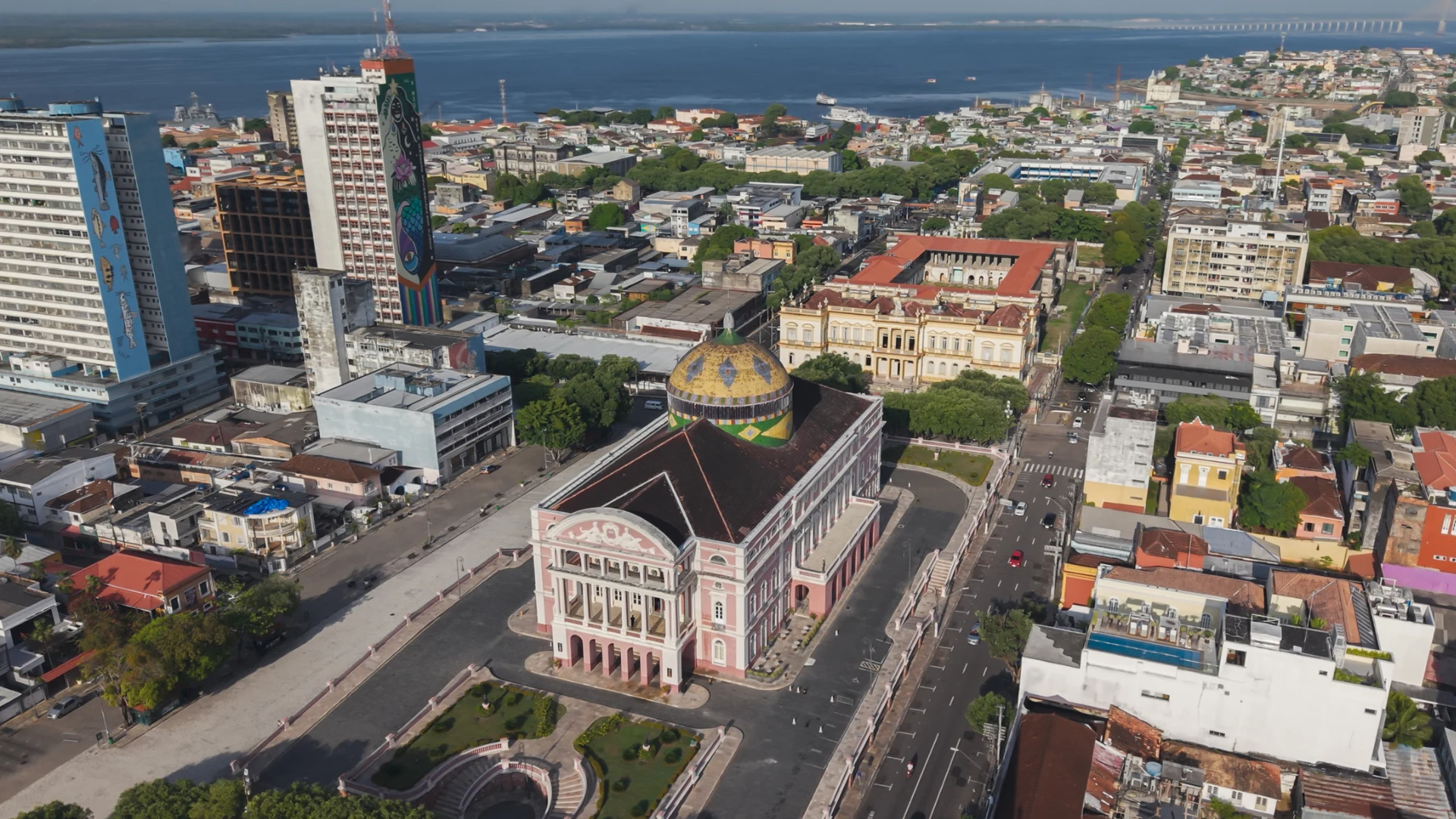
Aerial view of the historic Teatro Amazonas in downtown Manaus, featuring its colorful domed roof, surrounding city streets and buildings, with the Rio Negro visible in the background.
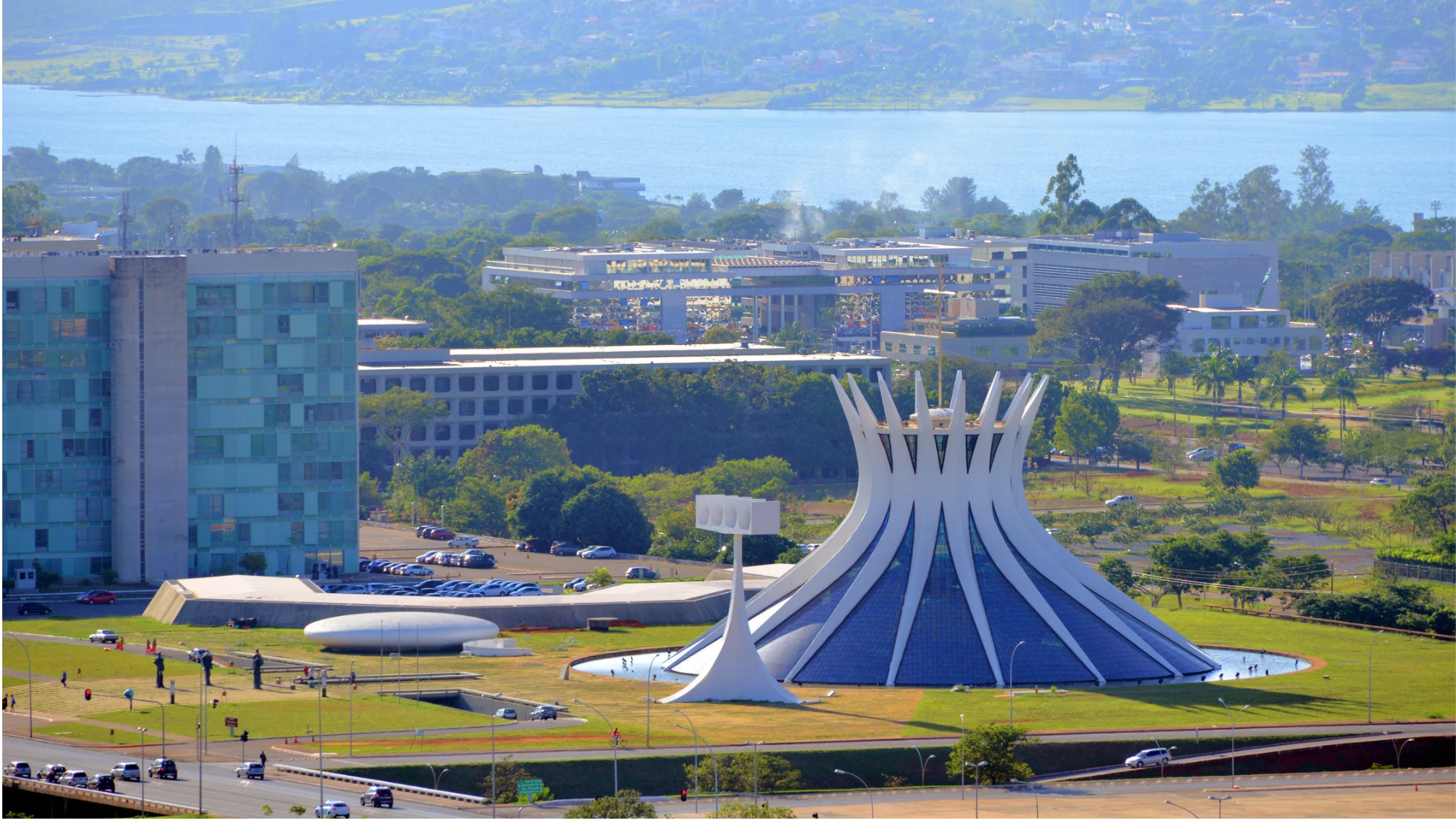
Aerial view of Brasília’s Metropolitan Cathedral surrounded by green lawns and modern government buildings. The iconic white structure stands out against the cityscape, with a lake and distant hills visible in the background.
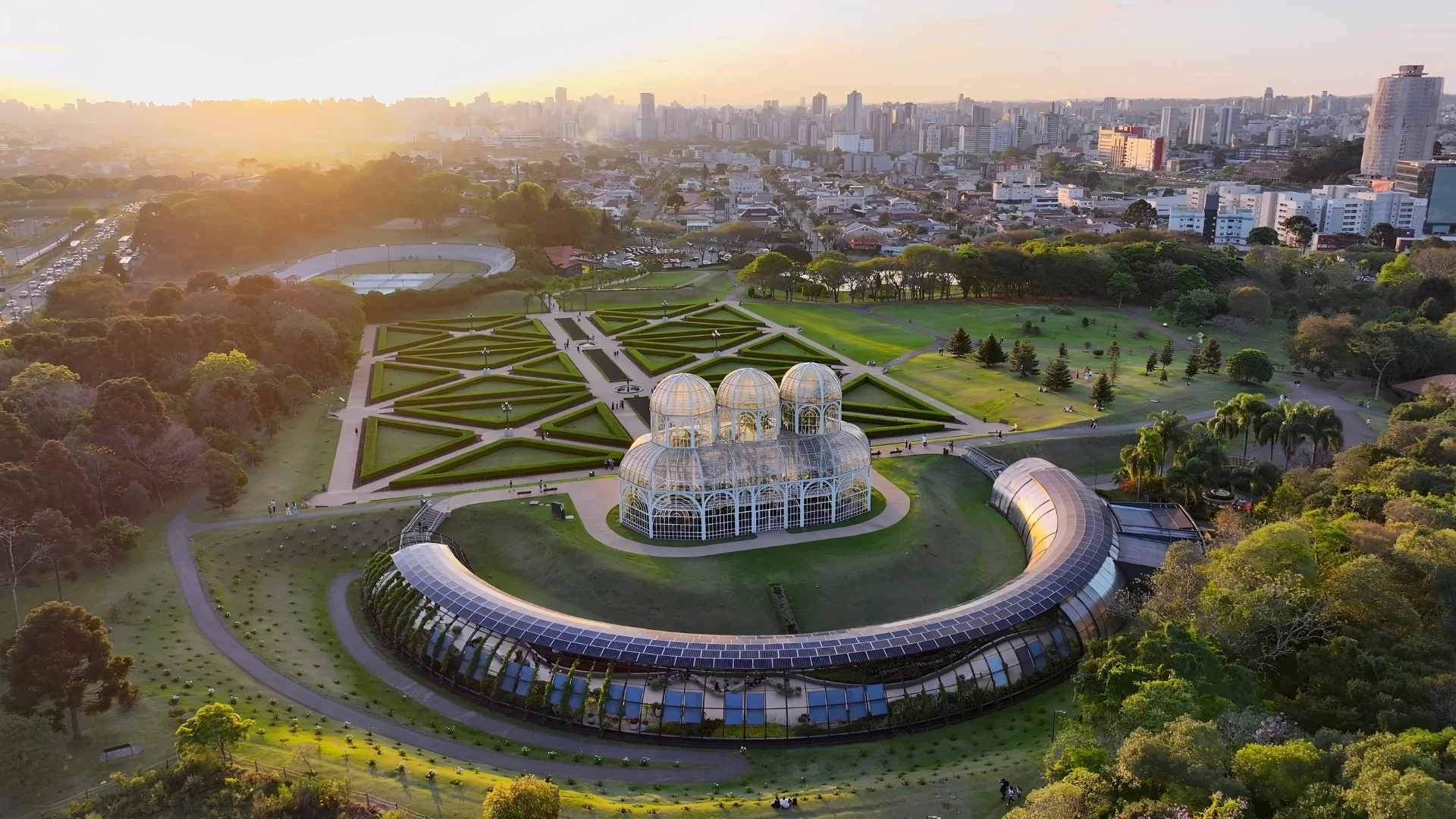
Aerial view of a glass greenhouse surrounded by formal geometric gardens and green lawns at sunset, with a large city skyline in the background and tree-lined parkland extending across the landscape.

A Welcoming Destination for International Visitors


What ultimately distinguishes Brazil as a destination is not only what it offers — but how it makes people feel.

Visitors consistently remark on the warmth and openness of Brazilian communities, the extraordinary diversity of a culinary landscape built on fresh ingredients and centuries of cultural exchange, and a social atmosphere in which international guests are not merely welcomed — they are embraced.

Brazil is a majority-urban society, with over 80% of its population living in cities, and a median age of around 35 — young, dynamic, and deeply connected to the world. It is a country that harmonizes tradition and modernity, continental scale and intimate human connection, natural grandeur and urban sophistication.

To experience Brazil is to encounter a place that sharpens your thinking, expands your perspective, and stays with you long after you leave.

For international students and executives, Brazil offers something rare: an educational environment embedded within an unforgettable cultural and human experience — one that enriches not only careers, but lives.

About FDC

The SchoolOur Campuses

About FDC

The SchoolOur Campuses

Our Programs

Degree ProgramsSummer school

Life at FDC

About BrazilThe FDC Experience

Life at FDC

PrivacySitemap

Contact Us

Students Services - FDC’s International Office

For information about the General Data Protection Law (LGPD) and the actions taken by the Fundação Don Cabral to ensure security and transparency in the handling of personal data, please visit our Privacy Page (opens in new tab).

Contact us
Learning Journeys

Our Programs

Degree ProgramsSummer schoolLearning Journeys
About Brazil
The FDC Experience
internationaloffice@fdc.org.br

Ranking e Certificações

ranking-financial EN Logo
amba en logo
equis en logo